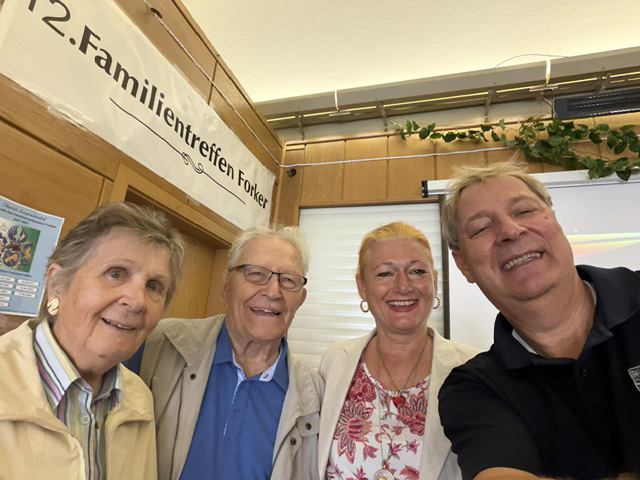
Dear relatives and friends—Forkers, Forkerts, Furkers, and Furkerts—
It is hard to believe, but three years have already flown by! Our 12th Forker Reunion was a resounding success for everyone involved. It was wonderful to see so many familiar faces finding their way back to us.
The exchange of information, family stories, and memories got into full swing immediately. A particularly emotional highlight was the proud announcement of new additions to the family and grandchildren in our ranks—our generation of tomorrow!
Our gathering got off to a festive start at the Langenwolmsdorf church, where Pastor Tom Seidel opened the day with a moving devotional service focusing on Zechariah and his life story.
Unfortunately, our mayor, Maik Hirdina, had to cancel his visit at the last minute. This was due to the election of the 20th Basalt Queen, which was unexpectedly moved up by a day, causing it to clash directly with our reunion date. However, we were excellently represented: a heartfelt thank you goes to local representative Richard Säuberlich and local chronicler Romy Roch, who officially welcomed us and guided us through the rest of the day.
A huge thank you goes to the entire organizing team for the magnificent execution of the event. Special thanks are due to Inge and Joachim Forker, who—as always—stepped in to help exactly where it was needed most.
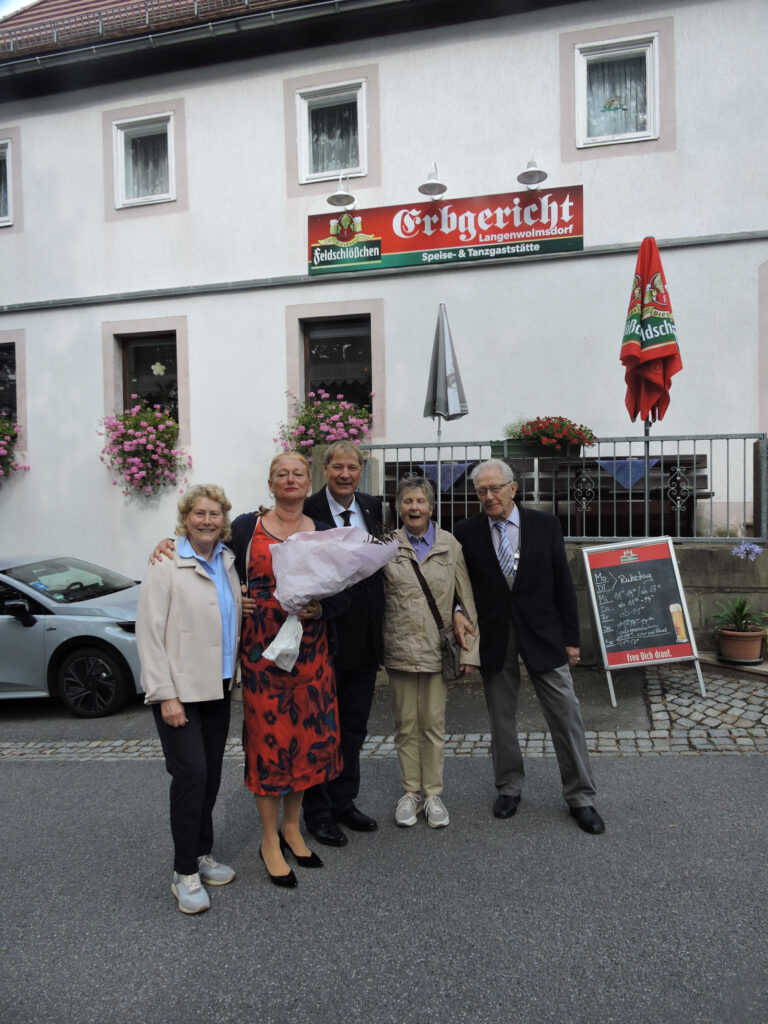
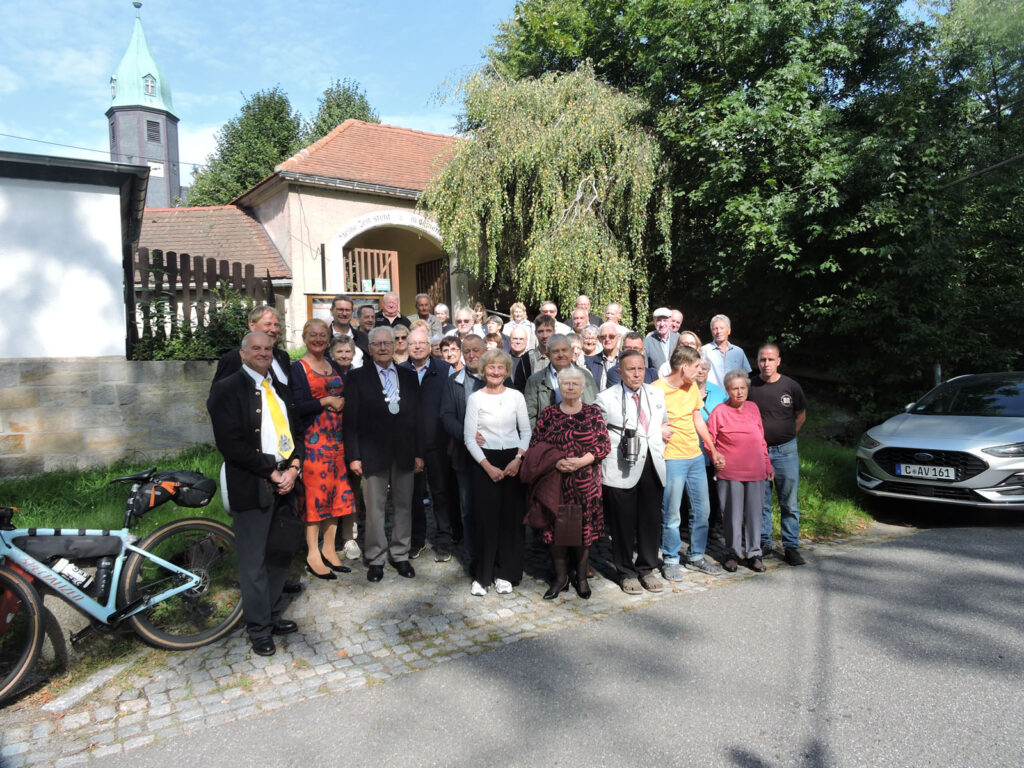
Below, you will find the official minutes of our 12th reunion. Of course, the obligatory group photo at the gate is included, too; this and many other pictures are now available for you will to view in the members’ area.
Yours, Wigand
MINUTES of the 12th Gathering
at the “Erbgericht” inn
in Langenwolmsdorf
on September 12, 2026
Participants:
Chairs: Wigand Forker (Kirch-Göns) and Joachim Forker (Düsseldorf)
Organization: Monika and Wigand Forker (Kirch-Göns)
Speakers: Joachim Forker (Düsseldorf) and Wigand Forker (Kirch-Göns)
Church representative: Pastor Tom Seidl
Sexton: Sigrid Grützner
Cantor: Christine Seipold
Guests of honor: Richard Säuberlich, Local Mayor of Langenwolmsdorf; Romy Roch, Historian from Stolpen
Guests: Uwe Rosendahl (Braunschweig) and Gunter Förster (Hohnstein, district of Rathewalde)
Entertainment:
Minutes: Wigand Forker (Kirch-Göns)
Invited:
- Persons invited: 312
- Registered by August 31, 2026: 63
- Absent with notice: 30
- Absent without notice: 2
- Arrived unregistered: 0 (+briefly attended and left: 0)
- No response at all: 85
- Returned letters: 136
- Total present: 59 (compared to 61 in 2023 – a decrease of 2)
Program items and schedule
The twelfth family reunion also presented us with organizational challenges. Despite dates having been confirmed in advance, unexpected schedule changes occurred. Nevertheless, we look back on a very lovely and harmonious gathering.
1. Pre-event gathering: Forker Stammtisch, September 11, 2023, starting at 6:00 PM
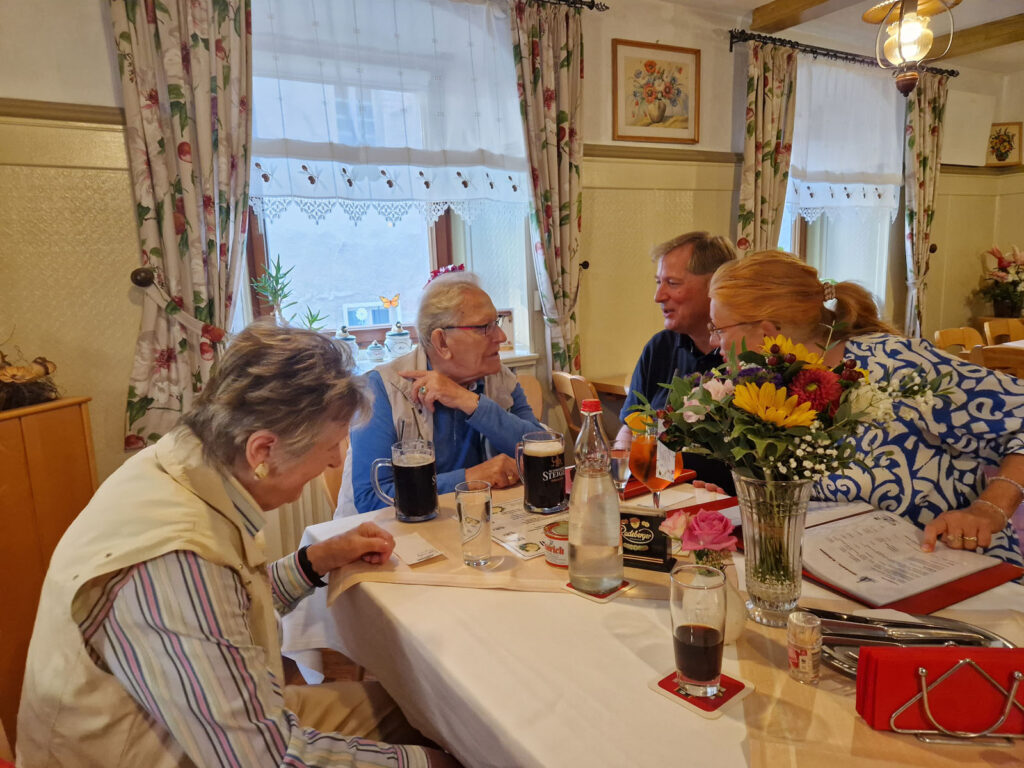
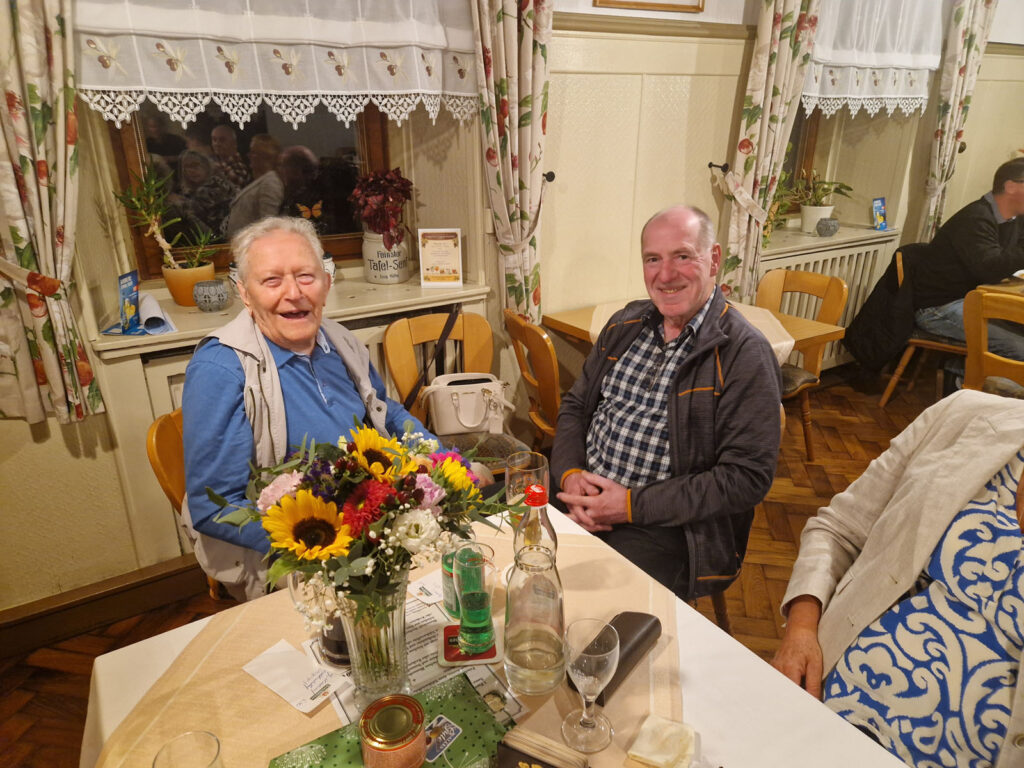
After a three-year hiatus, the Forker Stammtisch finally took place again at the Erbgericht Langenwolmsdorf. After such a long break, we were curious to see who would show up. The turnout was fantastic, as always, and we had an incredible amount to talk about.
2. Gathering, September 12, 2023, 2:00 PM – 2:30 PM: Church visit and devotional service
A flurry of activity was already underway on Friday evening: the first industrious hands began the setup work, which was successfully completed by early Saturday morning. However, there was one slight disappointment: Stolpen Mayor Maik Hirdina unfortunately had to cancel his attendance at very short notice. The reason was an important regional engagement—the election of the new “Basalt Queen” in Stolpen had been unexpectedly moved up to Saturday afternoon, around 4:00 PM.
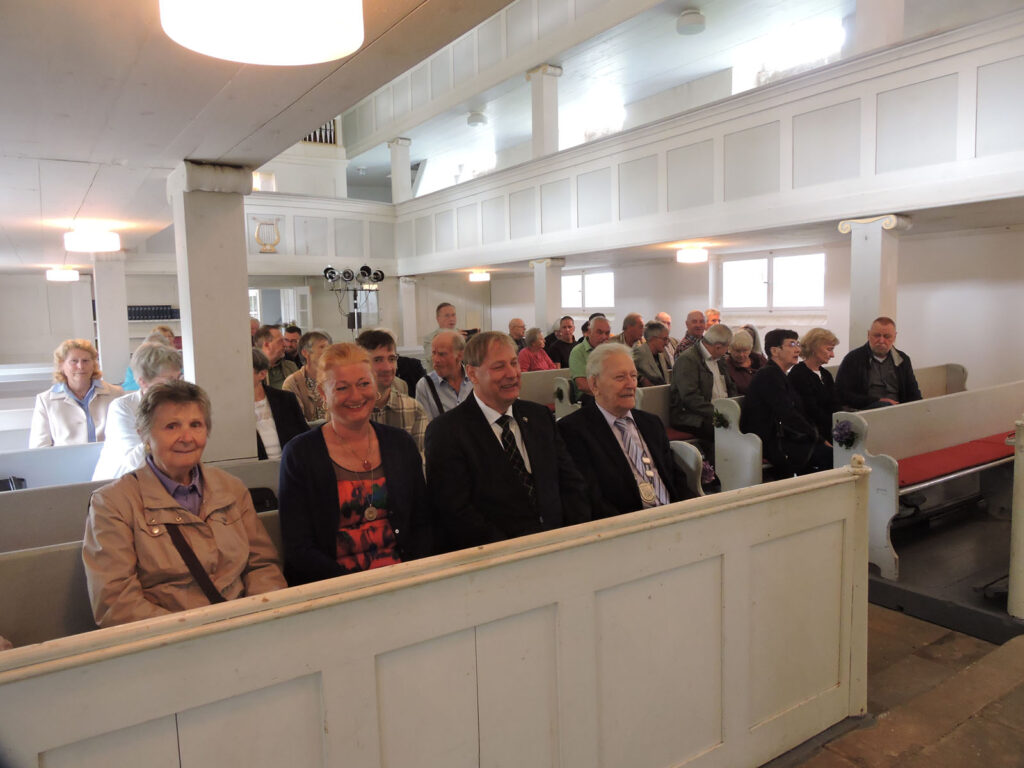
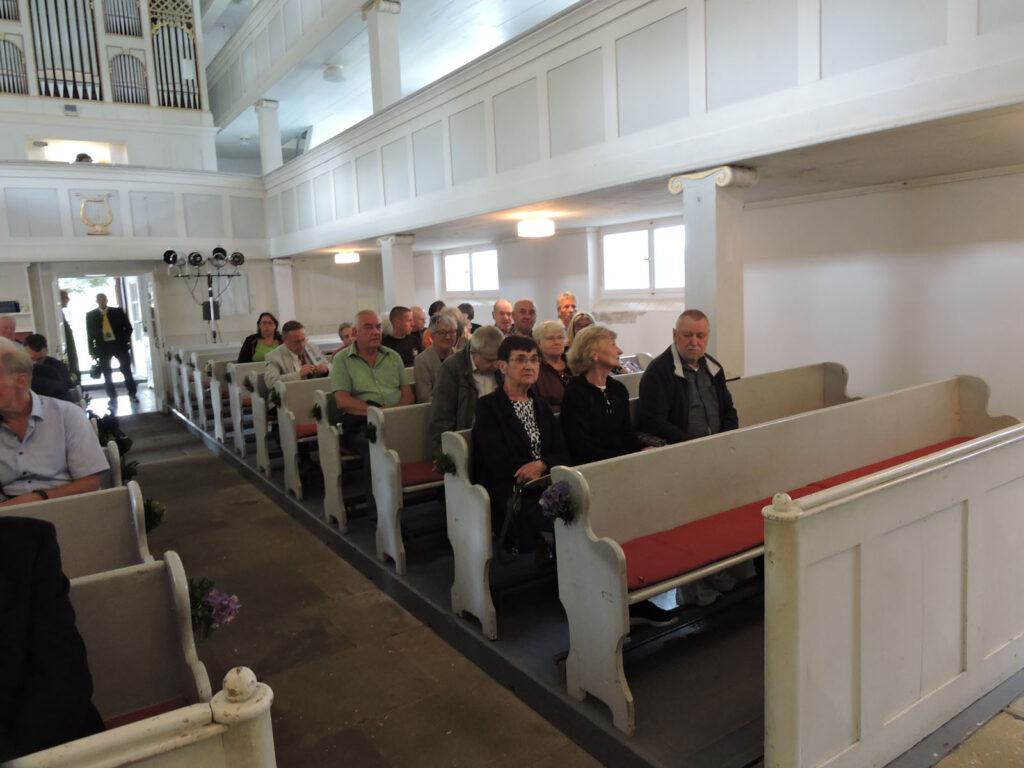
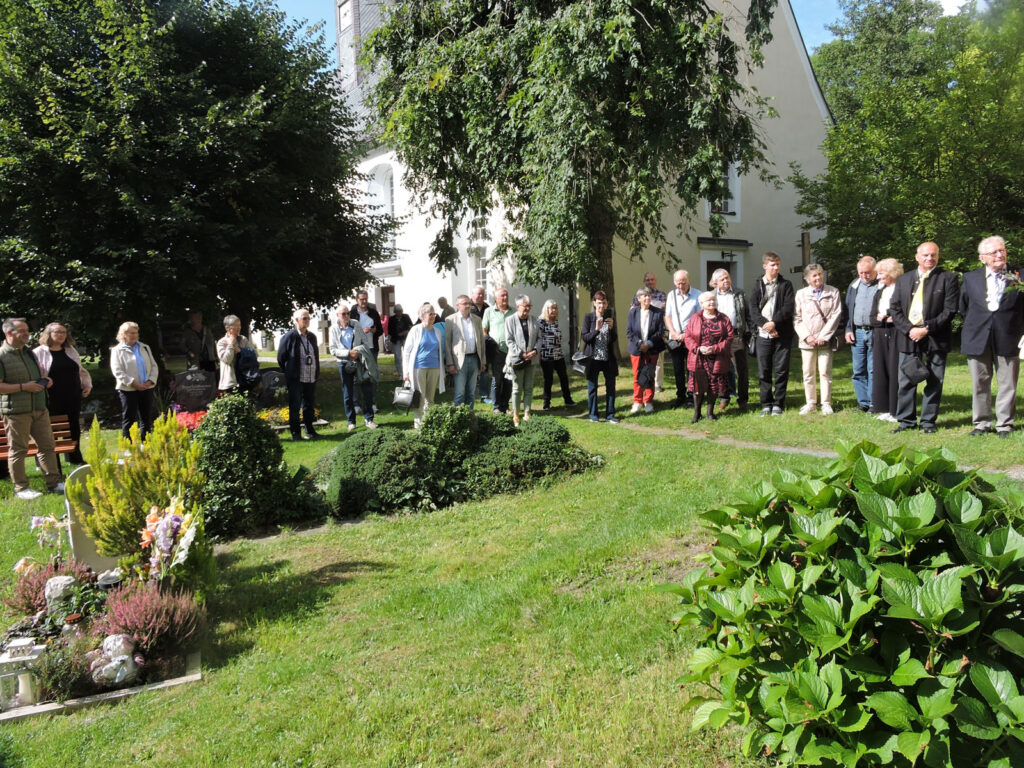
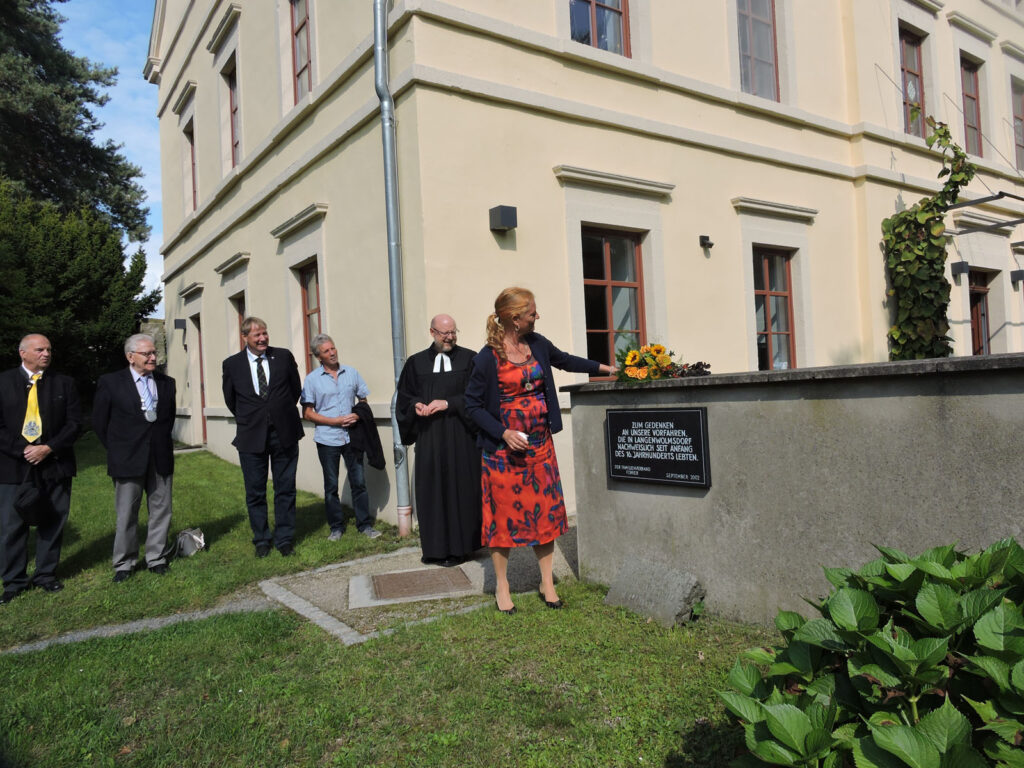
Promptly at 2:00 p.m., the bells of the church in Langenwolmsdorf began to ring; there, Pastor Tom Seidel started the service with us by singing the hymn “Danke für diesen guten Morgen” (Thank You for This Good Morning) before opening the solemn devotional. His sermon focused on the famous biblical story of Zacchaeus, the chief tax collector from Jericho (Luke 19:1–10). After a powerful closing hymn sung together from the hymnal, we walked out to the cemetery with the pastor. We paused at the memorial plaque to honor our ancestors with a deep sense of connection. Following moving moments of shared silence, Monika lovingly placed a beautiful, radiant bunch of sunflowers against the wall—a visible token of remembrance that captured the sunshine of the day.
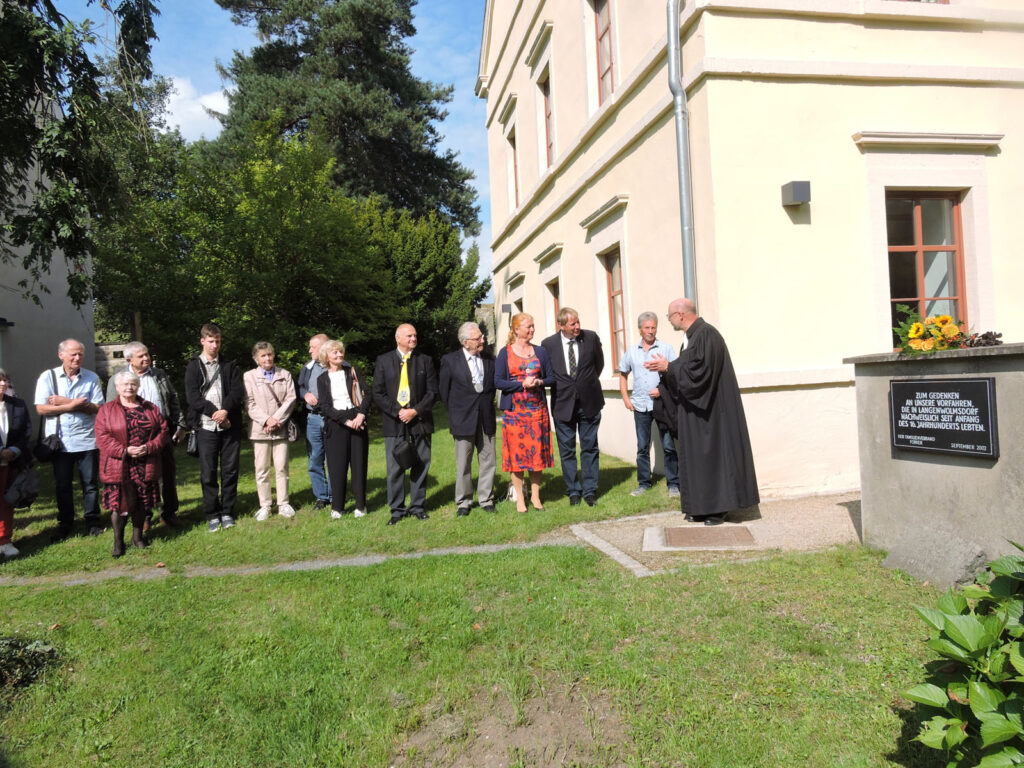
3. Mandatory family photo at the entrance to the church grounds (2:40 PM – 2:45 PM)
Flexibility was our best companion that day. Since the mayor had to cancel, our schedule shifted slightly. To ensure our entertainment program could start right on time at 2:45 PM, Pastor Tom Seidel thankfully kept things brief, shortening his sermon by ten minutes. The reason: our performer had another show scheduled for that evening and needed to leave in good time. However, before the lively program began—and following the commemoration of our ancestors—it was time to line up for the traditional family photo! We extend our heartfelt thanks to Romy Roch and Uwe for the wonderful group shot.
4. Welcome, presentation by Wigand, coffee break, and… (2:45 PM – 3:30 PM)
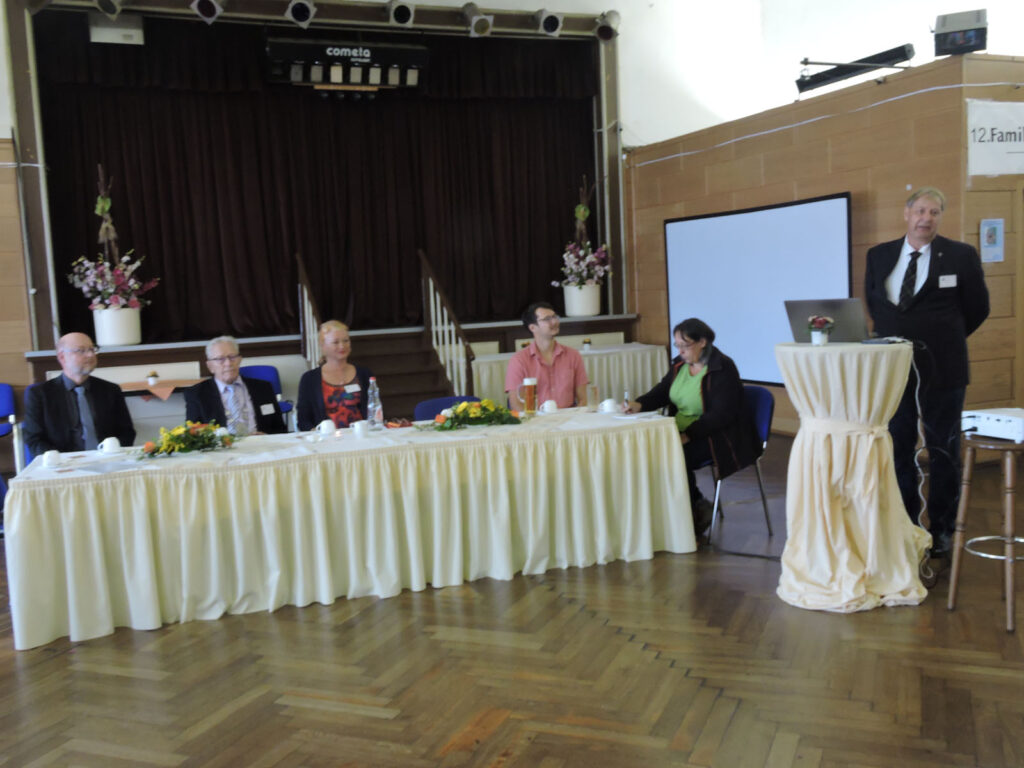
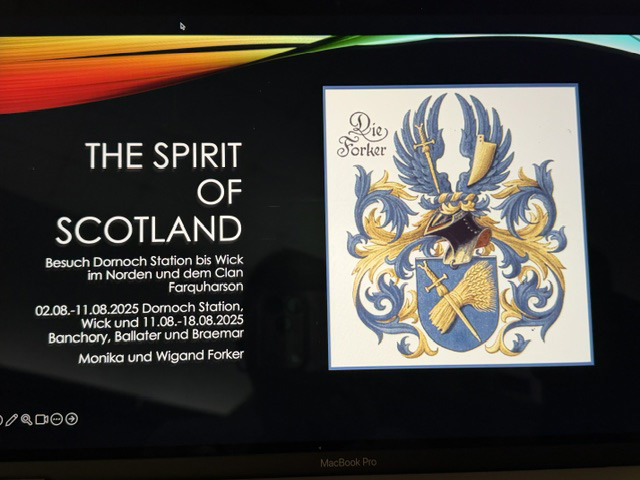
Wigand kicked things off by warmly welcoming everyone present and immediately handing the floor to our “new” local representative, Richard Säuberlich, for his welcoming address. Next, Romy Roch—our historian from Langenwolmsdorf—took the podium. She offered us a fascinating glimpse into her ongoing work on the Langenwolmsdorf chronicle and provided a current update on its progress. To charmingly bridge the short wait before the entertainment program began, Wigand whisked us away to Scotland in our imaginations. He shared captivating stories from the northeastern Highlands—specifically, the picturesque region stretching from the area around Dornoch Station toward Wick. For geography enthusiasts: the idyllic town of Dornoch is located about 70 kilometers from Inverness.
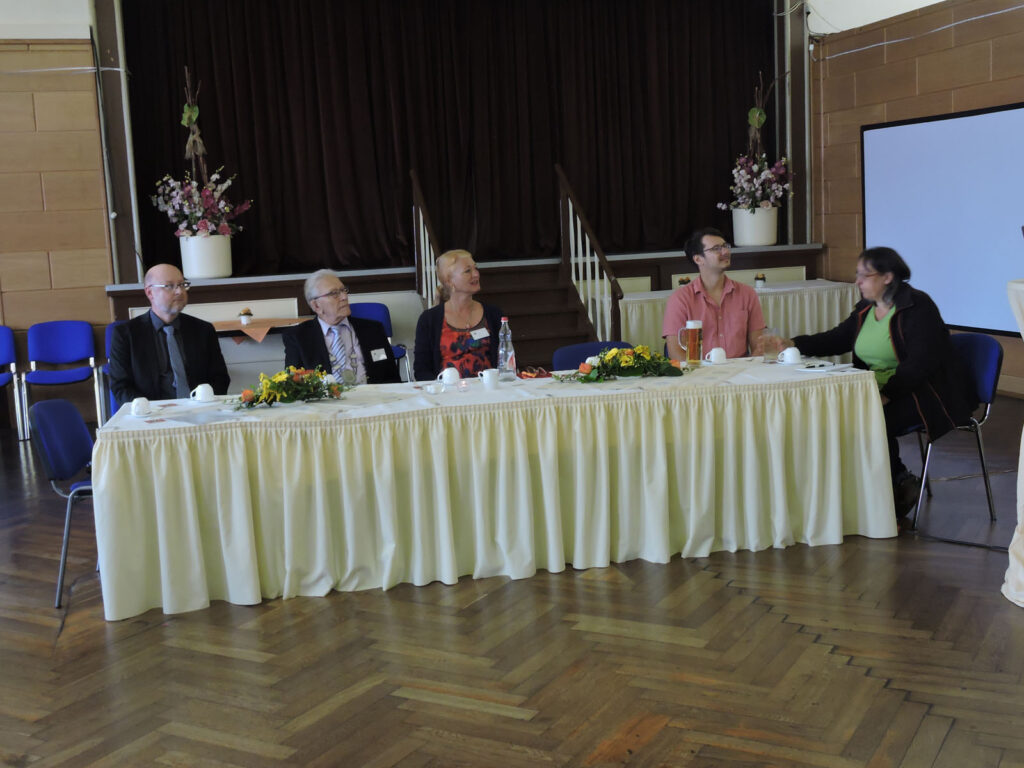
5. Entertainment began at 3:30 PM with Peter Flache
An absolute highlight of our afternoon was the performance by Peter Flache, a top-class entertainer we were delighted to secure for the event. Special thanks go to Gunter, whose spontaneous and energetic efforts made this fantastic part of the program possible. With his distinctive blend of humorous rhymes, musical interludes, and witty sketches, the renowned cabaret artist, actor, and author demonstrated the full extent of his talent. His hilariously funny “Little Red Riding Hood” sketch quickly became a standout moment, leaving the audience in tears of laughter.
After this entertaining cultural program, a sweet treat was most welcome: around 4:30 PM, the Nestroy family and their team spoiled us with excellent coffee and cake. A huge thank you goes to Mrs. Nestroy and her hardworking crew; they had their hands full throughout the three-day event and ensured that the entire catering operation ran like clockwork.
6. Welcome speech by Honorary President Jochen at 6:00 PM.
Exactly 100 years ago (in 1926), Hans-Georg’s grandfather created the very first family tree of the Forker descendants. That marked the official beginning of our family research! We can therefore proudly say: “Today, we look back on 100 years of family research.” Special thanks go to Jochen, who has played a pivotal role in driving and shaping this work for 40 years with tireless dedication, deep passion, and wholehearted commitment. We are pleased to share his moving contribution here:
Dear family members, esteemed guests,
Today we celebrate something few families can claim: 100 years of family research. A century of curiosity, coincidences, discoveries—and sometimes a bit of detective work, too.
When we looked back at the first 70 years in our brochure in 1999, we had no idea that one day we would be standing here—with even more stories, even more insights, and, yes, even more Forkers.
1. The Beginnings – Paul Julius Forker
Let us picture the beginning: It is the year 1926. Paul Julius Forker, a 71-year-old retiree, is sitting at the kitchen table. A newspaper article lies before him. And suddenly, he asks himself: “Who exactly were all those aunts and uncles who used to be constantly standing in the living room?”
That single moment of curiosity was the starting point for everything we are celebrating today.
Paul began his research—without the internet, without photocopiers, without Google. Armed only with a pen, a bicycle, and the patience of a saint. He interviewed relatives, visited parish offices, wrote letters, and met with others sharing the family name in Dresden and Bautzen. And then came that legendary moment:
The 9-meter roll of wallpaper. Spread out in his son’s gymnasium, Paul knelt before it, recording names as if he were drawing a map of our family.
That is how our first great family portrait came into being—hand-drawn, in the truest sense of the word.
2. A Fresh Start After the War – and a Saxon Coincidence
After the war, the research came to a standstill. It was not until Paul’s grandson, Hans-Georg, that the thread was picked up again. And then came 1986—a year that could almost be described as the “rebirth” of our research. By then, I had settled in Düsseldorf and thought I was the only “Forker” in the Rhineland. Until a mechanic friend of mine said:
“I know another guy who sounds just like you!”
A Saxon dialect right in the middle of the Rhineland—and suddenly, family research was back on the agenda. Thanks to that coincidence, we found each other: Siegfried in Mönchengladbach, Klaus in Lohmar, Hans-Georg in Refrath. And in January 1986, we decided: We’re going to keep going.
3. From paper to the digital age
It was a stroke of luck that Hans-Georg had preserved his grandfather’s old records. What used to be written on a roll of wallpaper now fit onto two typewritten pages—typed in landscape format, of course.
Then came the computer. The first genealogy programs. Back then, I thought: This is the future! Today, my grandchildren laugh at it: “Grandpa, that looks just like Windows 95!”
The Internet ushered in a whole new phase: suddenly, we could search for relatives worldwide. By fax to America, by email to Uruguay—and today via WhatsApp, before the coffee is even ready.
And then the online archives: church records, newspapers, photos, government files—everything accessible with a single click. Incidentally, the Mormons had already been photographing church records back when we still thought a camera was something only for rich people. If a church record exists anywhere, the Mormons have likely already scanned it.
4. DNA – The Search for Our Origins
Once our family branches had been largely clarified, a new question arose: Where do we actually come from?
DNA research yielded fascinating insights: The founding ancestors from Langenwolmsdorf and Lauterbach were, in fact, brothers. As for the connection to a Scottish Forker clan? That remains an open question. But let’s be honest: a little mystery is part of every good family story.
5. What Family Research Really Means
Family research is about more than just collecting names. It connects generations. It tells stories of life paths, destinies, courage, loss, and new beginnings. It makes history tangible—not as something abstract, but as a part of who we are.
When we look at our ancestors, we don’t just see data. We see people—people whose decisions led to us sitting here today.
6. Acknowledgments
My thanks go to:
- The founders—Paul Julius Forker, his son Georg, and his grandson Hans-Georg.
- The chroniclers—Martina Forker and Markus Forker, who made our family brochure possible in 1999.
Special thanks to our President, Wigand, and his wife, Monika, for their dedication, and to all those who support us today—digitizing, researching, writing, organizing, making calls, and sometimes simply listening.
Without you, this family legacy would not exist.
7. Looking to the Future
A century lies behind us. The question is: Who will carry this work forward into the next hundred years?
Our task is not only to preserve the past but also to document the present—for those who come after us.
8. Concluding Remarks
A single initiative launched in 1926 has evolved into a shared family legacy—one that was interrupted, resumed, and has been carried forward to this day.
May our family association continue to help keep our family history alive in the future. “We do not merely explore our past—we preserve it for the future.”
Following Jochen’s speech, we turned our attention to the work of the association—an endeavor that is, by nature, both time-consuming and costly. Gunter spoke eloquently on this subject, reminding us that our community relies on voluntary donations to continue this valuable work. Thanks to the tremendous support of everyone present—and with special thanks to Inge for her efforts in collecting contributions—we raised a wonderful total of 705 euros that day. These funds will lay the foundation for our 13th Forker reunion in three years’ time. Anyone wishing to provide further support to the association is warmly invited to contribute, whether financially or through active assistance. A heartfelt thank you goes to Christian for his generous additional donation. We always welcome helping hands and supporters!
7. Conclusion
Wigand offered warm parting words: He wished all participants a wonderful time and a safe journey home, expressing his sincere hope that everyone would meet again—happy and healthy—at this same location in three years. With these moving words, the thoroughly successful 12th Forker family reunion officially came to a close at 7:00 PM. As the final conversations wound down, many industrious hands were already hard at work in the background: exhibition materials were carefully dismantled and packed for transport, helping to lighten the load for the cleanup team scheduled for Sunday morning.